
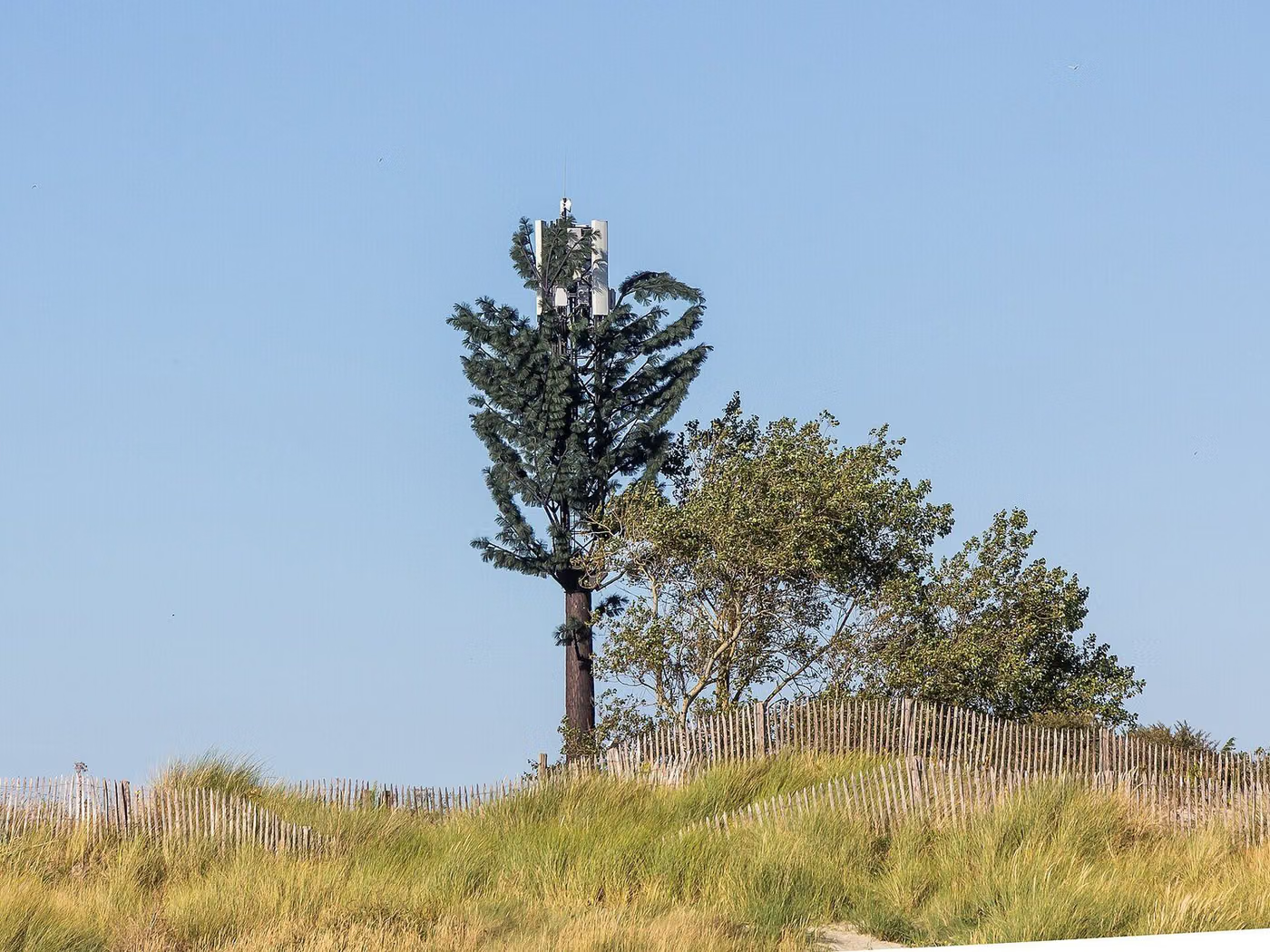
What Is LTE — RED?
LTE radio testing is where the cellular device is measured against transmitter characteristics, receiver characteristics and performance requirements defined in the 3GPP TS 36.521 series; It is also the test group where it is evaluated according to the EN 301 908 compatible standard for supply to the market.
Purpose of LTE — RED
The purpose is to verify that the device exhibits grid-compatible power, spectrum mask and receiver performance and complies with radio legislation.
Which Products Is LTE — RED Applied To?
- cellular modules
- Smartphones and tablets
- Router and CPE devices
- In-car telematics units
In Which Sectors Is LTE — RED Used?
Standards Related to LTE — RED
- REDEU radio equipment directive test
- ETSIEuropean telecommunications standards test
- FCCUS radio and EMC regulations test
LTE — RED Conditions
- Bantlar
- 3GPP bands declared by the device; selected according to target market
- Transmitter measurements
- Maximum output power, power control, adjacent channel leakage ratio (ACLR), spectrum emission mask, unwanted broadcasts
- Receiver measurements
- Reference sensitivity level, selectivity, blocking
- My success
- Efficiency measurements under defined propagation conditions
Equipment for LTE — RED
- Cellular network emulator
- RF wired test setup and attenuator network
- Semi-reflective room (for diffuse measurements)
- channel emulator
Sample Requirements for LTE — RED
- The device must support test SIM and test mode
- Declared band list and power class must be documented
- Final production software must be used
- Antenna configuration must be defined
Duration of LTE — RED
Typically 3–8 weeks depending on the number of tapes.
LTE — RED Procedure
- 1Band list and power class are declared.
- 2The device connects to the network emulator.
- 3Transmitter measurements are made in each band.
- 4Receiver sensitivity and selectivity are measured.
- 5Unwanted publications are scanned.
- 6Results are compared to 3GPP limits.
LTE — RED Acceptance Criteria
Acceptance criteria are the limit values given for each measurement in the 3GPP TS 36.521 series; For placing on the market, the limits of the harmonized standard apply.
Evaluation of Results
The number of bands directly determines the test scope; Each declared band is measured separately. Additionally, operator acceptance (GCF/PTCRB) is a separate requirement from regulatory compliance.
LTE — RED Report
- Declared bands and power class
- Applied specification versions
- Transmitter and receiver measurement results
- Unwanted broadcast scans
- Measurement uncertainty
Accreditation
EUROLAB holds internationally recognised accreditation obtained from accreditation bodies party to the IAF and ILAC multilateral recognition arrangements, under ISO/IEC 17025 for laboratory testing, ISO/IEC 17020 for inspection and surveillance, and ISO/IEC 17021-1 and ISO/IEC 17065 for system and product certification. This chain ensures the reports and certificates issued are accepted worldwide.
Whether this test can be offered within accredited scope depends on your product and the standard applied; since accreditation is method-based, the scope is confirmed in writing at the quotation stage.
Scope and authorisationsRelated Regulations
- Radio Equipment Directive 2014/53/EU (RED)
- Operator acceptance programs (GCF, PTCRB)
RF and Wireless Testing — What Does This Testing Field Cover?
The section below describes the field that the LTE test belongs to; the conditions and acceptance criteria of this particular test are given in the sections above. The scope specific to your product is confirmed in writing at the quotation stage.
RF and wireless testing shows that a device containing a radio uses the spectrum correctly and operates within the limits the relevant legislation allows. This family is a separate body of work from EMC: EMC addresses unwanted interference, whereas here INTENTIONAL emission is assessed.
Spectrum is a public and limited resource, and this determines the legal character of the field. A device spilling outside its permitted band or emitting excess power is not merely a technical defect but a violation that disrupts someone else's service. Radio conformity is therefore policed more strictly than other test fields and markets maintain their own national regimes.
Measurements run separately on the transmitter and receiver sides. On the transmitter side, output power, occupied bandwidth, frequency error, unwanted emissions, adjacent channel power and the power envelope are measured. On the receiver side, sensitivity, selectivity, blocking and spurious response rejection are assessed. The receiver side is often neglected, but in some bands it is a regulatory requirement.
Access protocol specific behaviours are a third axis: listen before talk (LBT), duty cycle, dynamic frequency selection (DFS) and transmit power control (TPC). These mechanisms enable spectrum sharing and it must be shown that they work correctly.
HUMAN EXPOSURE is the fourth axis and one of the most commercially critical. For devices used close to the body, SAR (specific absorption rate) is measured; for devices used at a distance, a field strength assessment is made. Limits and measurement methods vary by market; the same device is assessed separately for Europe and the United States.
Market regimes are decisive in this family and do not substitute for one another: the Radio Equipment Directive and ETSI harmonised standards in Europe, FCC authorisation in the United States (through a TCB for intentional radiators), ISED in Canada, MIC in Japan, KC in South Korea and SRRC in China each carry their own set of requirements. The same device requires a separate file for each market, and some markets impose a local representative or local testing requirement.
Module integration is the subject that raises the most questions in the field. Using a certified radio module does not automatically make the device compliant. A module certificate is valid for a defined antenna, a defined supply and defined conditions of use; if the antenna changes, the layout changes or the module is operated at a different power level, reassessment is required.
The presence of several radios in the same device (Wi-Fi + Bluetooth + cellular + NFC) gives rise to a simultaneous transmission assessment: SAR and unwanted emission measurements are made for the worst case in which the radios operate together.
Method groups in this field
Transmitter measurements
Output power, occupied bandwidth, frequency error, unwanted emissions, adjacent channel power, power spectral density.
Receiver measurements
Sensitivity, selectivity, blocking, spurious response rejection.
Spectrum sharing mechanisms
Verification of listen before talk, duty cycle, dynamic frequency selection and transmit power control.
Human exposure
SAR measurement (handheld and body-worn devices), field strength assessment, multi-radio scenarios.
Protocol conformity
Cellular network conformity testing, Bluetooth and Wi-Fi certification testing, GNSS performance.
Antenna measurements
Gain, radiation pattern, efficiency and total radiated power (TRP) measurements.
Commonly confused in this field
- Using a certified module does not automatically make the device compliant; if the antenna, layout or power level changes, reassessment is required.
- An FCC file does not replace a CE file; each market operates its own regime.
- Receiver side measurements are a regulatory requirement in some bands; measuring only the transmitter produces an incomplete file.
- SAR limits and measurement methods differ by market; a result in one market does not carry over to another.
- For devices carrying several radios the simultaneous transmission scenario must be assessed; measuring them individually is not sufficient.
- Some markets impose local testing or a local representative requirement; technical conformity alone does not secure market access.
Which decisions these results support
- Market access under radio equipment legislation
- Verification of the antenna and RF front end design
- SAR and RF exposure conformity
- Verification of module integration and the scope of reassessment
- Determining the worst case in multi-radio scenarios
Related Tests

Frequently Asked Questions About LTE — RED
According to which standard is LTE made?
LTE is executed in scope 3GPP TS 36.521-1, 3GPP TS 36.521-3, EN 301 908 serisi, FCC Part 22/24/27, GCF and PTCRB test plans, RED, ETSI and FCC. The limit values and acceptance criteria to be applied are defined in the product standard; The version valid for your product is confirmed in writing at the offer stage.
Which products does LTE apply to?
Mainly applied to cellular modules, Smartphones and tablets, Router and CPE devices and In-car telematics units. Whether your product is included in the scope is determined by examining its technical specifications and intended use.
Under what conditions is LTE done?
The determining parameters are: Bantlar — 3GPP bands declared by the device; selected according to target market, Transmitter measurements — Maximum output power, power control, adjacent channel leakage ratio (ACLR), spectrum emission mask, unwanted broadcasts and Receiver measurements — Reference sensitivity level, selectivity, blocking. The full terms are in the "Test Conditions" section on the page and vary depending on the product standard.
What kind of sample is needed for LTE?
The device must support test SIM and test mode, Declared band list and power class must be documented and Final production software must be used. The number of samples is determined according to the product standard and the scope to be reported.
How long does LTE take?
Typically 3–8 weeks depending on the number of tapes. This duration belongs to the experiment itself; sample preparation, queuing and reporting are also evaluated. A realistic schedule for your product is given in the offer.
What is the LTE result called "appropriate"?
Acceptance criteria are the limit values given for each measurement in the 3GPP TS 36.521 series; For placing on the market, the limits of the harmonized standard apply.