
What Is ISTA 2A?
ISTA 2A is a partial-simulation test lying between Series 1 integrity tests and Series 3 simulation tests. It adds atmospheric conditioning and compression phases alongside vibration and drop.
Purpose of ISTA 2A
The purpose is to test the packaging not only against mechanical stresses but also against the climatic conditions and stacking load during transport. Moisture and temperature markedly reduce the strength of corrugated-board packaging; seeing this effect is not possible with Series 1 tests.
Which Products Is ISTA 2A Applied To?
- Corrugated-board shipping boxes
- Stacked-transport product packaging
- Food and beverage packaging
- White-goods and furniture packaging
In Which Sectors Is ISTA 2A Used?
Standards Related to ISTA 2A
- ISTA 2Apartial simulation test on packaging test
ISTA 2A Conditions
- Conditioning
- Atmospheric-conditioning phase; conditions are defined in ISTA 2A
- Clamping
- Loading representing the stacking load; the calculation method is given in the standard
- Vibration
- Defined profile and duration
- Drop
- Height dependent on package mass and defined orientations
Equipment for ISTA 2A
- Climatic (conditioning) chamber
- Compression test machine
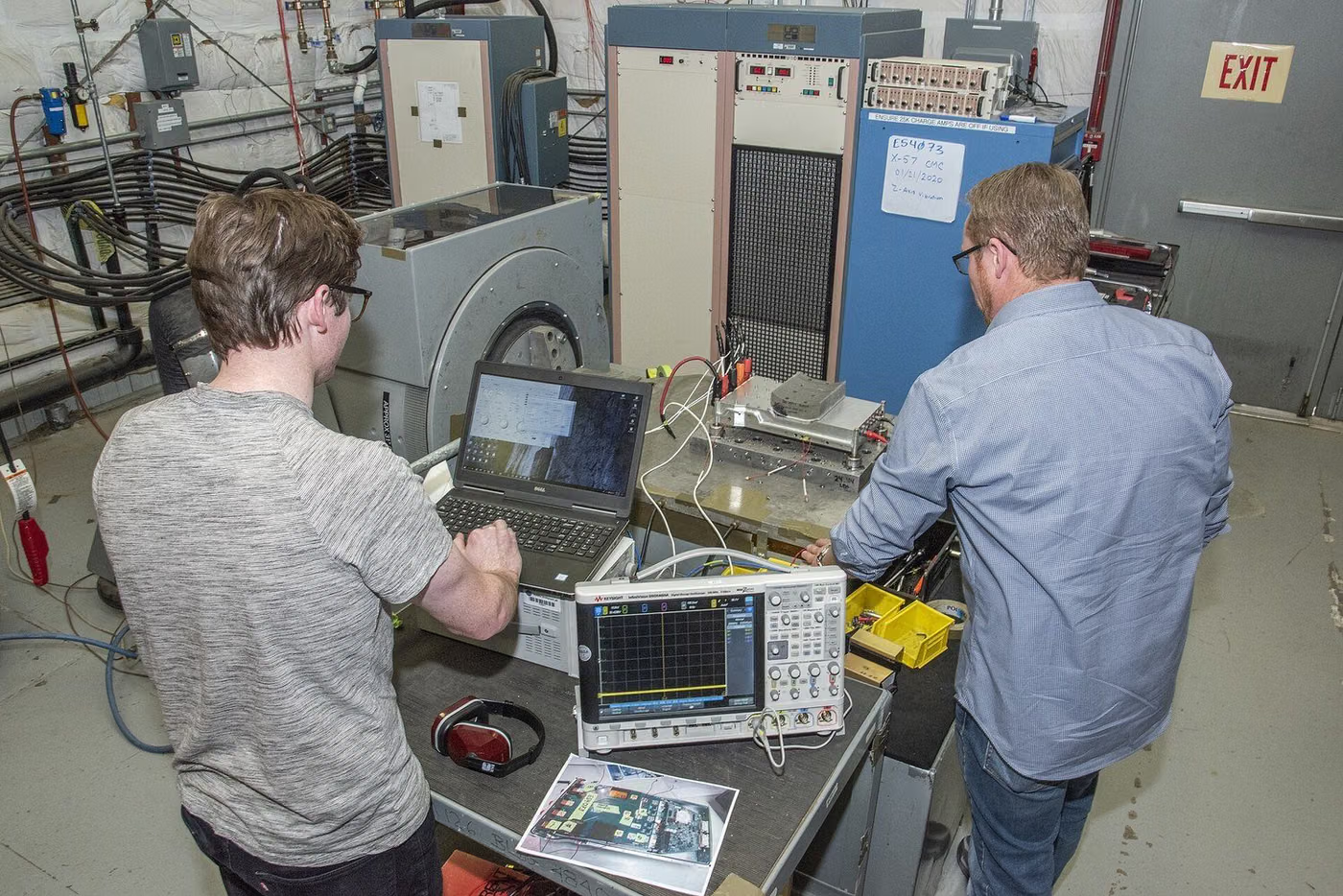
- Vibration table
- free fall tester
Sample Requirements for ISTA 2A
- The product must be presented in its real packaging, ready for sale
- Owing to conditioning, the specimen must remain in the laboratory
- The stacking arrangement and pallet configuration must be stated
- More than one package is recommended; the test is destructive
Duration of ISTA 2A
Atmospheric conditioning alone is on the order of a day; the total programme generally takes several working days.
ISTA 2A Procedure
- 1The package is weighed, measured and its initial condition is recorded.
- 2Atmospheric conditioning is applied.
- 3The compression load is applied as defined.
- 4The vibration phase is carried out.
- 5The drop phase is performed in the defined orientations.
- 6An inspection is performed after each phase.
- 7Product function and packaging integrity are assessed.
ISTA 2A Acceptance Criteria
The acceptance criterion is that the product remains undamaged and the packaging retains its transport and stacking function; the exact criterion comes from the specification.
Evaluation of Results
The compression result after conditioning drops markedly compared with a measurement made in a dry environment. This difference allows a realistic safety margin to be determined in packaging design.
ISTA 2A Report
- Sample description, serial number and configuration
- Applied standard and year of printing
- Selected intensity level and basis for the level
- Experimental setup and measurement points
- Functional checks performed during the experiment
- Observations, measurement results and photographs
- A statement that the result applies only to the specimen submitted for testing
Accreditation
EUROLAB holds internationally recognised accreditation obtained from accreditation bodies party to the IAF and ILAC multilateral recognition arrangements, under ISO/IEC 17025 for laboratory testing, ISO/IEC 17020 for inspection and surveillance, and ISO/IEC 17021-1 and ISO/IEC 17065 for system and product certification. This chain ensures the reports and certificates issued are accepted worldwide.
Whether this test can be offered within accredited scope depends on your product and the standard applied; since accreditation is method-based, the scope is confirmed in writing at the quotation stage.
Scope and authorisationsRelated Regulations
- Carrier and retailer packaging specifications
- EU 94/62/EC Packaging and Packaging Waste Directive (design requirements)
Standard-Based Tests — What Does This Group of Pages Cover?
The section below describes the field that the ISTA 2A test belongs to; the conditions and acceptance criteria of this particular test are given in the sections above. The scope specific to your product is confirmed in writing at the quotation stage.
Standard-based tests are test pages whose address comes from a standard number. What the user is looking for is often not the name of the test but the code written in their specification: not "salt spray test" but "ASTM B117", not "drop test" but "IEC 60068-2-31", not "vibration" but "MIL-STD-810 Method 514".
This preference reflects the reality in the field. An engineer sees a code in the specification received from a customer and searches for that code; they do not need to know the name of the test. The code is the identity of the test and distinguishes the different adoptions of the same test by different bodies.
This group addresses the different adoptions of the SAME TEST separately. The same physical phenomenon may be published under different numbers by ISO, ASTM, EN, IEC, DIN and JIS. Even where the numbers are the same (as with ISO 6892-1 and EN ISO 6892-1), specimen preparation, conditions, calculation details and reporting may differ; adoptions may carry national annexes. The code written in the specification therefore governs, and "similar" is not accepted.
Searching at code level meets a different need from searching at scope level. A user searching for "corrosion testing" wants to learn about the field; a user searching for "ASTM B117" has a specification in hand and wants to know the feasibility, duration and price of that test. Two different intents require two different page structures.
The page for a code describes the scope of that code, the test field it belongs to, the product groups in which it is required and how it differs from neighbouring codes. Test conditions, durations and acceptance criteria are NOT CARRIED: these are defined in the copyrighted text of the standard and in the product specification. This boundary is a deliberate choice; a wrong duration or acceptance criterion means directly incorrect work.
Different parts of the same code and different adoptions of the same number are linked between pages. A user searching for IEC 60335 also sees 60335-2-40; a user searching for ISO 6892-1 also sees the EN ISO 6892-1 and DIN EN ISO 6892-1 adoptions. These links are derived from the number of the code rather than written by hand.
The edition year is NOT CARRIED in the library. It is held as "ASTM D638" rather than "ASTM D638-22", because the edition in force changes over time and the address of the page should not age with the edition. If a year is stated in your specification, that edition governs; if not, the most current edition is applied.
Method groups in this field
Searching by code
Direct search for the code written in the specification; it is found in the library with its code, scope title and issuing body.
Searching by scope title
A test whose code is not known is searched by its subject; a search for "salt spray" brings up the related codes.
Series and part relationships
The other parts of the same series are shown, derived from the number of the code.
Adoption relationships
Different bodies' adoptions of the same number are matched; the claim is kept limited to "the same number".
Superseded codes
Withdrawn codes are not held in the library but, when searched for, the user is directed to the counterpart in force.
Commonly confused in this field
- Different adoptions of the same number are not identical texts; they may carry national annexes.
- The code written in the specification governs; a technically similar code cannot be substituted.
- If an edition year is stated, that edition is applied; the most current edition is not automatically accepted.
- A code page carries no test conditions or acceptance criteria; these are in the copyrighted text of the standard and in the product specification.
- A part code (for example -2-40) may not be sufficient on its own; the general part of the series is applied as well.
Which decisions these results support
- Matching the code written in the specification to the correct laboratory scope
- Distinguishing between equivalent adoptions
- Clarifying the scope and edition at the quotation stage
- Finding the current counterpart of withdrawn codes
Related Tests



Frequently Asked Questions About ISTA 2A
Why is conditioning necessary?
Corrugated board loses strength as it absorbs moisture. Compression strength measured without conditioning representing a humid environment comes out higher than it actually is.
Can 3A be performed instead of 2A?
Yes, 3A is more comprehensive. The choice depends on how the shipment is transported and the customer's request.