
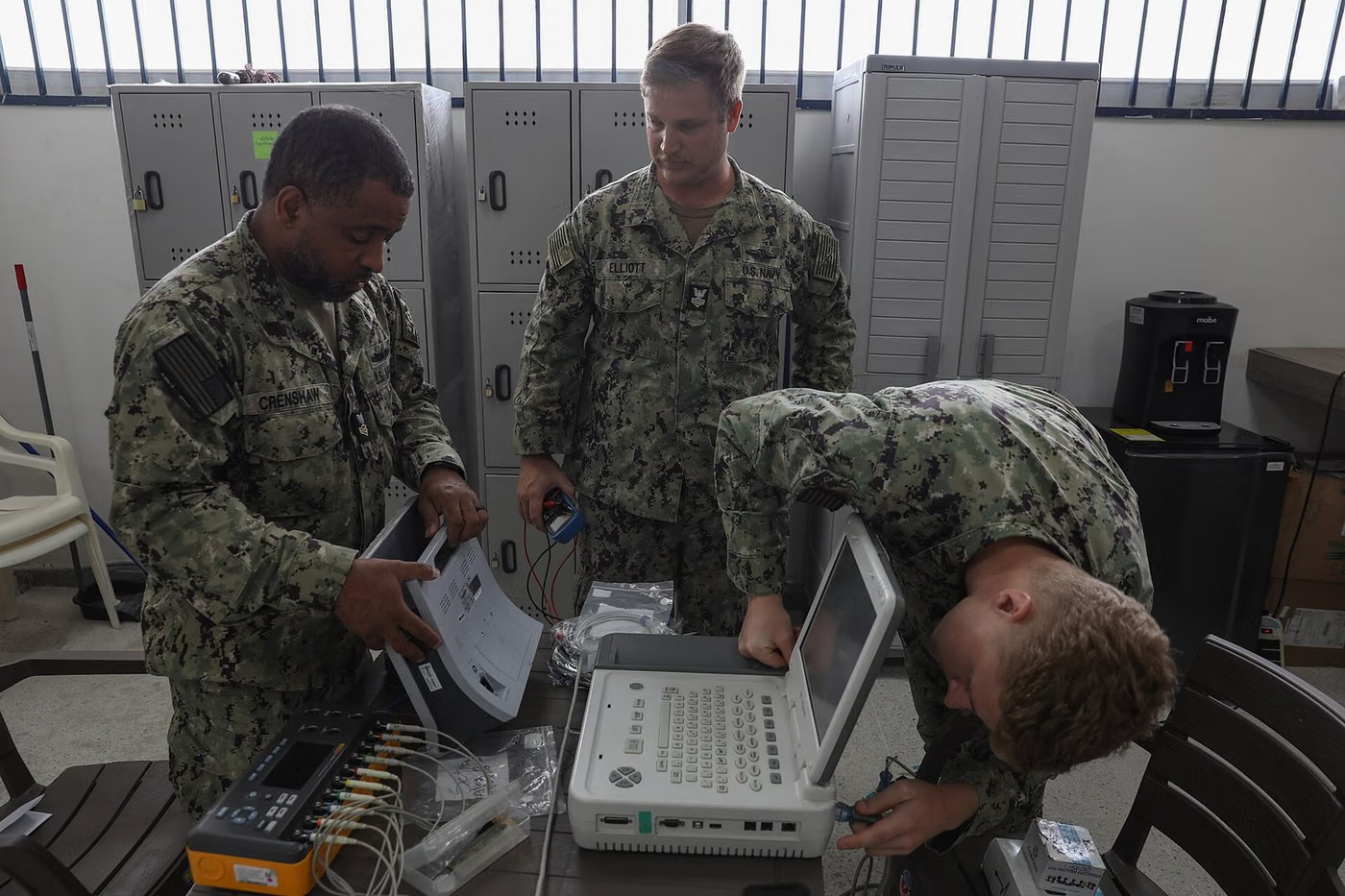
What Is Electrical Safety IEC 60601?
The IEC 60601-1 test verifies that medical electrical equipment meets electrical, mechanical and thermal safety requirements for the patient and user. What sets it apart from general electrical safety standards is that, on the assumption the patient may be connected to the device unconscious and defenceless, it introduces much stricter leakage-current limits and the concept of two separate means of protection (MOOP/MOPP).
Purpose of Electrical Safety IEC 60601
The purpose is to show that the device does not create unacceptable risk for the patient or user under normal condition and single-fault condition, and retains its essential performance.
Which Products Is Electrical Safety IEC 60601 Applied To?
- Patient monitors and ECG devices
- Infusion and injection pumps
- Surgical and electrosurgical devices
- Imaging systems
- Dialysis and respiratory devices
In Which Sectors Is Electrical Safety IEC 60601 Used?
Standards Related to Electrical Safety IEC 60601
- IEC 60601-1Basic safety in medical electrical devices test
- IEC 60601-1-2electromagnetic compatibility in medical electrical devices test
- IEC 60601-1-6
- IEC 60601-1-8
- IEC 60601-1-11
- IEC 60601-2 series
- ISO 11607end product sterile barrier packaging test
Electrical Safety IEC 60601 Conditions
- Means of protection
- MOOP for the operator, MOPP for the patient; insulation distances and withstand requirements differ
- Leakage current
- Earth, enclosure and patient leakage currents are measured under normal condition and single-fault condition
- Applied-part type
- B, BF or CF; the classification determines the leakage-current limits
- Risk management
- The risk management file under ISO 14971 is an integral part of the standard
Equipment for Electrical Safety IEC 60601
- Medical safety analyser (leakage-current measurement)
- Dielectric strength (hipot) tester
- Earth continuity tester
- Heating-test rig and thermocouples
- Mechanical-strength test rigs
- Climate chamber
Sample Requirements for Electrical Safety IEC 60601
- The final product and all its accessories
- Including applied parts and patient cables
- The risk management file and the essential-performance definition must be provided
- Circuit diagrams, component list and insulation diagram are required
- Instructions for use and label samples must be submitted
Duration of Electrical Safety IEC 60601
A complete IEC 60601-1 assessment typically takes several weeks; it extends when collateral and particular standards are added.
Electrical Safety IEC 60601 Procedure
- 1The device is classified: protection class, applied-part type, mode of operation.
- 2The risk management file and essential-performance definition are reviewed.
- 3Distances and means of protection are verified via the insulation diagram.
- 4Earth-continuity and dielectric-strength tests are performed.
- 5Leakage-current measurements are taken under normal and single-fault conditions.
- 6Heating and mechanical-strength tests are applied.
- 7The alarm, software and usability collateral standards are assessed.
- 8Documentation and marking are checked.
Electrical Safety IEC 60601 Acceptance Criteria
The acceptance criteria are IEC 60601-1's own limit values: patient leakage-current limits according to applied-part type, insulation withstand voltages, accessible-surface temperature limits and mechanical-strength requirements are defined in the standard's text.
Evaluation of Results
The assessment relies not only on measurement results but also on the risk management file. The standard ties acceptability to risk analysis in many clauses; the test cannot be completed if the risk file is missing.
Electrical Safety IEC 60601 Report
- Device classification and essential-performance definition
- Applied standard, edition and collateral standards
- Insulation-diagram assessment
- Leakage-current measurement results (normal and single fault)
- Dielectric-strength and earth-continuity results
- Heating and mechanical test results
- Documentation and marking assessment
Accreditation
EUROLAB holds internationally recognised accreditation obtained from accreditation bodies party to the IAF and ILAC multilateral recognition arrangements, under ISO/IEC 17025 for laboratory testing, ISO/IEC 17020 for inspection and surveillance, and ISO/IEC 17021-1 and ISO/IEC 17065 for system and product certification. This chain ensures the reports and certificates issued are accepted worldwide.
Whether this test can be offered within accredited scope depends on your product and the standard applied; since accreditation is method-based, the scope is confirmed in writing at the quotation stage.
Scope and authorisationsRelated Regulations
- MDR (EU) 2017/745
- Relationship with Low Voltage and EMC requirements
Medikal Cihaz Testleri — What Does This Testing Field Cover?
The section below describes the field that the Electrical Safety IEC 60601 test belongs to; the conditions and acceptance criteria of this particular test are given in the sections above. The scope specific to your product is confirmed in writing at the quotation stage.
Medical device testing shows that a device is safe for the patient and the user and maintains its intended performance. In this family safety is not only about avoiding harm; a device failing to perform its expected function is also treated as a risk. A monitor missing an alarm or a pump delivering the wrong dose is directly a patient safety event.
At the centre of the field is RISK MANAGEMENT, and this is what sets medical apart from other sectors. The risk management process run under ISO 14971 also determines which tests are required. The test list is not copied from a table of standards; it is derived and justified from the device's intended use, the nature and duration of patient contact, the use environment and foreseeable misuse.
Assessment consists of several separate bodies of work, each with its own set of standards. Biocompatibility runs through the ISO 10993 series, electrical device safety through the IEC 60601 series, sterilisation through ISO 11135/11137/17665, packaging through ISO 11607, software through IEC 62304 and usability through IEC 62366. The quality system (ISO 13485) is the framework that binds these together.
Which tests are required is determined by the device's CLASS and its MODE OF CONTACT WITH THE BODY. A product in brief contact with skin and an implant entering the bloodstream do not go through the same test set; the scope is set by a biological evaluation plan prepared under ISO 10993-1. That plan justifies in writing which endpoints are required and why the others are not.
Packaging and sterilisation are taken as seriously as the device itself in this field. For a sterile device the packaging is not a transport container but the barrier that maintains sterility; if the barrier is breached, the device is no longer sterile. Packaging processes are therefore validated and shelf life is supported by real-time ageing data.
For devices containing software, assessment shifts from testing towards PROCESS assurance. IEC 62304 defines which development and verification steps must be followed according to the safety class of the software; the evidence is the traceability of the development process. Testing software does not make it safe — the process record does.
The clinical side is a separate column of the technical file. Test reports show that the device is technically safe; clinical evaluation establishes that the device delivers the intended clinical benefit and that the benefit-risk balance is acceptable. Neither replaces the other.
Method groups in this field
Biocompatibility
Cytotoxicity, irritation, skin sensitisation, systemic toxicity, haemocompatibility, genotoxicity and local effects after implantation. The required endpoints are set by the ISO 10993-1 plan.
Electrical device safety
IEC 60601-1 basic safety and essential performance; EMC, alarm, usability and environmental requirements through the collateral standards.
Sterilisation validation
Validation of sterilisation processes by ethylene oxide, radiation or moist heat; bioburden and sterility assurance level studies.
Packaging
Integrity of the sterile barrier system, seal strength, distribution simulation and shelf-life studies.
Microbiological tests
Bioburden determination, sterility testing, bacterial endotoxin and, where required, carrier validation studies.
Software and usability
IEC 62304 life cycle evidence and use-error focused evaluation under IEC 62366.
Commonly confused in this field
- Cytotoxicity alone is not evidence of biocompatibility; the required set of endpoints is determined and justified according to ISO 10993-1.
- An ISO 13485 certificate does not confer CE marking; classification under the MDR, the technical file and the notified body process run separately.
- Accelerated ageing does not replace real-time ageing; a shelf life claim is supported by real-time data.
- A change of material (supplier, pigment, sterilisation method) may require the biological evaluation to be repeated; it is not a silent change.
- An assessment made without the collateral and particular standards for IEC 60601-1 is incomplete; which -1-x and -2-x standards were applied must appear in the report.
- In vitro diagnostic devices fall under the IVDR rather than the MDR, and laboratory equipment is often on the IEC 61010-1 side.
Which decisions these results support
- MDR/IVDR technical file and notified body assessment
- Completing the biological evaluation plan
- Sterilisation and packaging validation
- Determining shelf life and storage conditions
- Determining the scope of reassessment after a design change
Related Tests





Frequently Asked Questions About Electrical Safety IEC 60601
What is the difference between MOOP and MOPP?
MOOP (Means of Operator Protection) covers insulation requirements protecting the operator, and MOPP (Means of Patient Protection) those protecting the patient. MOPP requirements are stricter: a higher withstand voltage and larger insulation distances are required, because the patient is connected to the device directly and defencelessly.
What do applied-part types B, BF, CF mean?
They indicate the protection level of the part in contact with the patient. B is the most basic level; BF denotes a floating (isolated) applied part, and CF denotes protection at a level suitable for direct cardiac contact. CF is subject to the lowest leakage-current limits.
Are collateral standards mandatory?
This is determined by the nature of the device. EMC (60601-1-2) is applied to almost all electrical medical devices; alarm systems (60601-1-8), usability (60601-1-6) and the home healthcare environment (60601-1-11) apply according to the device's characteristics. There are also device-type-specific particular standards in the 60601-2 series.