
What Is Crevice Corrosion?
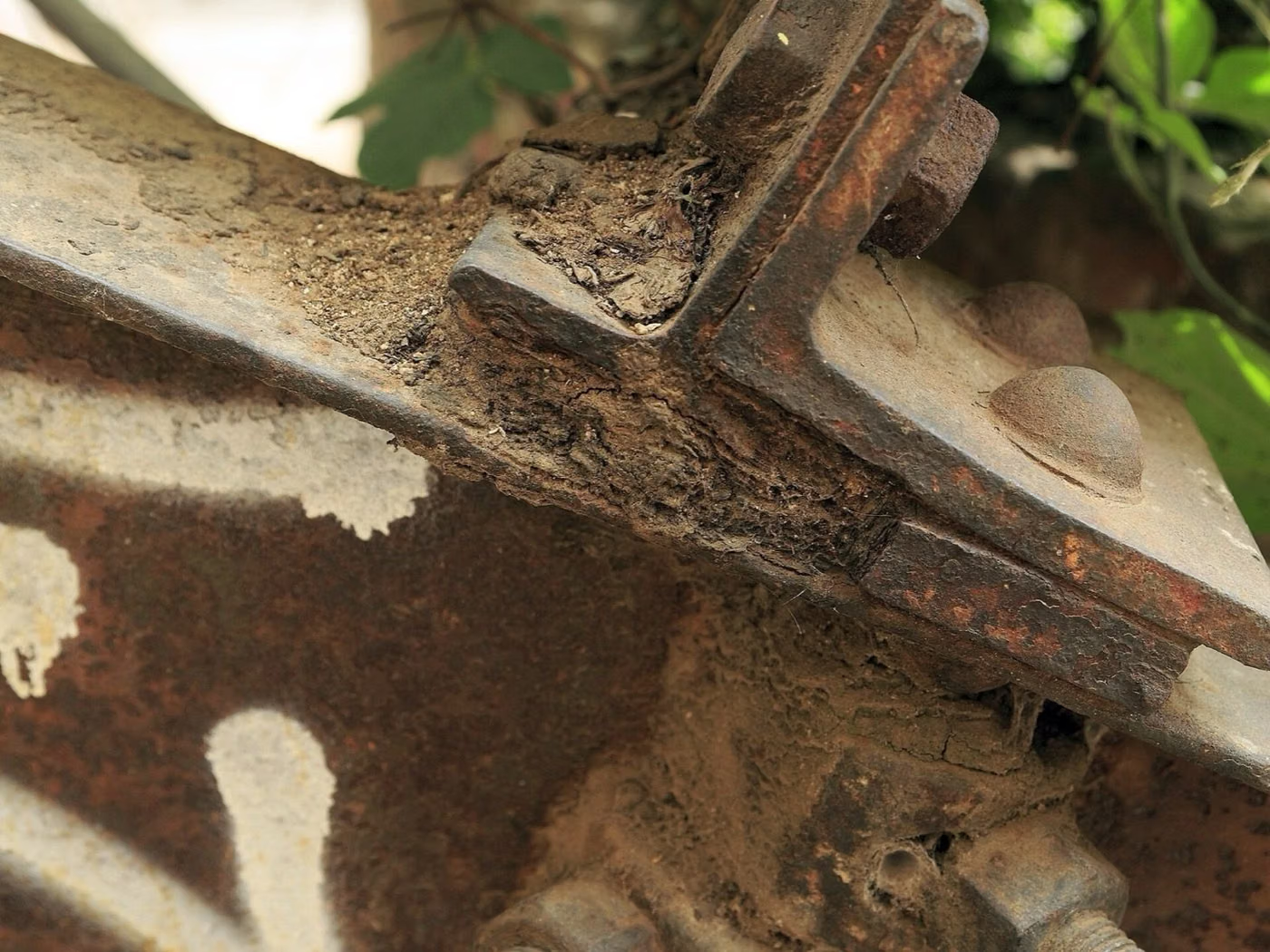
The crevice corrosion test assesses localised corrosion caused by oxygen depletion and chloride accumulation in a narrow gap between two surfaces. It is conducted using a crevice-forming element.
Purpose of Crevice Corrosion
The purpose is to determine corrosion risk in designs with narrow gaps such as gaskets, flanges, bolt heads and overlap regions.
Which Products Is Crevice Corrosion Applied To?
- Flange and gasket joints
- Stainless steel bolted joints
- Heat exchanger tube-to-tubesheet regions
- Seawater equipment
In Which Sectors Is Crevice Corrosion Used?
Standards Related to Crevice Corrosion
- ASTM G48pitting and crevice corrosion in stainless steels test
- ASTM G78
- ASTM G61
- ISO 17864
- ASTM B117tuz sisi (salt spray) korozyon testi test
- ISO 9227tuz sisi korozyon testi test
- ASTM G85modified salt fog (cyclic) test test
- ISO 16701cyclic corrosion test test
- ISO 6270strength in condensation environment test
- SAE J2334cyclic laboratory corrosion testing test
- VDA 233-102cyclic corrosion testing in automotive test
Crevice Corrosion Conditions
- range generator
- Artificial gap created by standard-defined material and tightening torque
- Solution
- Ferric chloride solution in ASTM G48
- Temperature
- Constant temperature or gradual increase for critical range corrosion temperature
- Time
- Defined in the standard; typically 24 – 72 hours
Equipment for Crevice Corrosion
- Crevice-former blocks and torque wrench
- Temperature-controlled bath
- Precision balance
- Stereo microscope and depth measurement
Sample Requirements for Crevice Corrosion
- The surface must be prepared per the standard
- The crevice former must be tightened to the defined torque
- Initial mass must be measured
- Generally at least three specimens
Duration of Crevice Corrosion
Typically 24 – 72 hours; a few days for critical temperature determination.
Crevice Corrosion Procedure
- 1The specimen surface is prepared and its mass is measured.
- 2The crevice former is assembled at the defined torque.
- 3The sample is immersed in ferric chloride solution.
- 4At the end of the defined duration, the sample is removed and disassembled.
- 5Corrosion depth and mass loss in the crevice region are measured.
Crevice Corrosion Acceptance Criteria
The acceptance criterion is given in the specification as maximum mass loss, maximum corrosion depth, or minimum critical crevice corrosion temperature.
Evaluation of Results
Whether corrosion occurs in the crevice region and its depth are assessed. Crevice corrosion generally starts at a lower temperature than pitting.
Crevice Corrosion Report
- Standard applied
- Crevice-former material and torque
- Solution, temperature and duration
- Mass loss and corrosion depth
- Microscopic images
Accreditation
EUROLAB holds internationally recognised accreditation obtained from accreditation bodies party to the IAF and ILAC multilateral recognition arrangements, under ISO/IEC 17025 for laboratory testing, ISO/IEC 17020 for inspection and surveillance, and ISO/IEC 17021-1 and ISO/IEC 17065 for system and product certification. This chain ensures the reports and certificates issued are accepted worldwide.
Whether this test can be offered within accredited scope depends on your product and the standard applied; since accreditation is method-based, the scope is confirmed in writing at the quotation stage.
Scope and authorisationsRelated Regulations
- Seawater and process equipment specifications
Corrosion Tests — What Does This Testing Field Cover?
The section below describes the field that the Crevice Corrosion test belongs to; the conditions and acceptance criteria of this particular test are given in the sections above. The scope specific to your product is confirmed in writing at the quotation stage.
Corrosion testing assesses under accelerated conditions how long metals and coatings last in a corrosive environment. The family contains two approaches, and the difference between them is the most important knowledge in the field: constant-condition tests and cyclic tests.
Constant-condition salt spray (ASTM B117, ISO 9227) maintains the same environment in the chamber throughout: the same salt concentration, the same temperature, a continuously wet surface. The strength of this approach is its REPEATABILITY; because the conditions are tightly defined, results from different laboratories come out close to one another. That is exactly the property wanted when monitoring production consistency and comparing suppliers.
But the real atmosphere is not constant. A surface gets wet, dries, warms, cools, takes UV and becomes soiled. The wet-dry cycle changes the corrosion mechanism: during drying the salt concentrates, oxygen access increases and corrosion accelerates. The form of damage on a continuously wet surface differs from that on a cyclically wetted one.
Cyclic tests (SAE J2334, VDA 233-102, ASTM G85, ISO 16701) imitate this variability and give results closer to the damage patterns seen in the field. The automotive sector has largely moved to this approach. The practical consequence is this: the same two coatings may RANK DIFFERENTLY in constant and cyclic tests; which test was applied determines the result.
No test in this family defines a DURATION OR ACCEPTANCE CRITERION. How many hours it is applied for and what level of damage is acceptable come from the product standard or the customer specification. The assessment scales are defined in separate standards: different scales are used for degree of rusting, blistering, creep from a scribe and loss of adhesion.
The damage looked for varies with the coating type. For metallic coatings, white rust (corrosion of the coating itself) and red rust (corrosion reaching the base metal) are reported separately, and specifications usually give a separate duration for each. On painted surfaces, creep from a scribe and blistering come to the fore.
Electrochemical methods are a separate body of work and answer a different question. Potentiodynamic polarisation, electrochemical impedance spectroscopy and pitting potential measurements reveal the MECHANISM and rate of corrosion within hours; chamber tests give the result visually over weeks. The two are complementary rather than alternatives.
Stainless steels have a special sub-body in the field: pitting and crevice corrosion and intergranular corrosion tests indicate the quality of the heat treatment and the condition after welding.
Method groups in this field
Constant-condition salt spray
ASTM B117 and ISO 9227 (NSS); for repeatable comparison and process control.
Acidified and accelerated
The AASS and CASS conditions of ISO 9227; preferred for decorative chromium-nickel coatings.
Cyclic corrosion
SAE J2334, VDA 233-102, ASTM G85 and ISO 16701; approaches field behaviour through wet-dry cycles.
Humidity and condensation
Steady damp heat, condensation and cyclic humidity tests; these reveal coating blistering.
Electrochemical
Polarisation, impedance spectroscopy, pitting and crevice corrosion potential measurements.
Stainless steel specific tests
Pitting and crevice corrosion, intergranular corrosion; indicators of heat treatment and weld quality.
Assessment scales
Scales for degree of rusting, blistering, creep from a scribe and loss of adhesion; the ratings come from these standards.
Commonly confused in this field
- Chamber hours cannot be converted into field life; there is no reliable conversion factor.
- Constant and cyclic tests can produce different rankings; whichever the specification states is the one applied.
- A corrosion report without a stated duration and acceptance criterion cannot be interpreted.
- If the coating thickness is not reported, the result cannot be compared; thickness directly affects durability.
- White rust and red rust say different things; the two must be reported separately.
- The position and angle of the specimen in the chamber affect the result; standards govern this and the report must document it.
Which decisions these results support
- Selection of the coating system and supplier approval
- Process control of the coating line and lot acceptance
- Evidence of durability for automotive and outdoor products
- Assessment of field corrosion damage and warranty decisions
- Verification of heat treatment and weld quality in stainless steel
Related Tests
Frequently Asked Questions About Crevice Corrosion
According to which standard is Crevice Corrosion made?
Crevice Corrosion is executed in scope ASTM G48, ASTM G78, ASTM G61 and ISO 17864. The limit values and acceptance criteria to be applied are defined in the product standard; The version valid for your product is confirmed in writing at the offer stage.
Which products does Crevice Corrosion apply to?
Mainly applied to Flange and gasket joints, Stainless steel bolted joints, Heat exchanger tube-to-tubesheet regions and Seawater equipment. Whether your product is included in the scope is determined by examining its technical specifications and intended use.
Under what conditions is Crevice Corrosion done?
The determining parameters are: range generator — Artificial gap created by standard-defined material and tightening torque, Solution — Ferric chloride solution in ASTM G48 and Temperature — Constant temperature or gradual increase for critical range corrosion temperature. The full terms are in the "Test Conditions" section on the page and vary depending on the product standard.
What kind of sample is needed for Crevice Corrosion?
The surface must be prepared per the standard, The crevice former must be tightened to the defined torque and Initial mass must be measured. The number of samples is determined according to the product standard and the scope to be reported.
How long does Crevice Corrosion take?
Typically 24 – 72 hours; a few days for critical temperature determination. This duration belongs to the experiment itself; sample preparation, queuing and reporting are also evaluated. A realistic schedule for your product is given in the offer.
What is the Crevice Corrosion result called "appropriate"?
The acceptance criterion is given in the specification as maximum mass loss, maximum corrosion depth, or minimum critical crevice corrosion temperature.