

What Is COD?
COD analysis determines the amount of oxygen required to break down organic and oxidisable inorganic matter in water with a strong oxidant (dichromate). The specimen is refluxed with dichromate under acidic conditions, in the presence of a catalyst, at high temperature; the dichromate consumed is measured titrimetrically or spectrophotometrically.
Purpose of COD
The purpose is to quickly determine wastewater's organic pollution load and monitor treatment efficiency. COD is the most widely used parameter in discharge legislation.
Which Products Is COD Applied To?
- Industrial wastewater
- Domestic wastewater
- Treatment plant inlet and outlet waters
- Surface waters
- Leachate waters
In Which Sectors Is COD Used?
Standards Related to COD
- TS EN ISO 15705 (COD — small-scale sealed-tube method)
- TS ISO 6060 (determination of COD by the dichromate method)
- TS EN ISO 5667-3 (preservation of samples)
- TS EN 1484 (TOC — complementary parameter)
COD Conditions
- Reflux
- At the temperature and duration defined in the standard, in a sealed tube
- Chloride interference
- Masking with mercury sulphate is required for high-chloride specimens
- Preservation
- The specimen is preserved by acidification with sulphuric acid and cooling
- Dilution
- High-COD specimens are diluted to the measurement range
Equipment for COD
- COD thermoreactor
- Spectrophotometer
- Automatic titrator
- Analytical balance and pipettes
Sample Requirements for COD
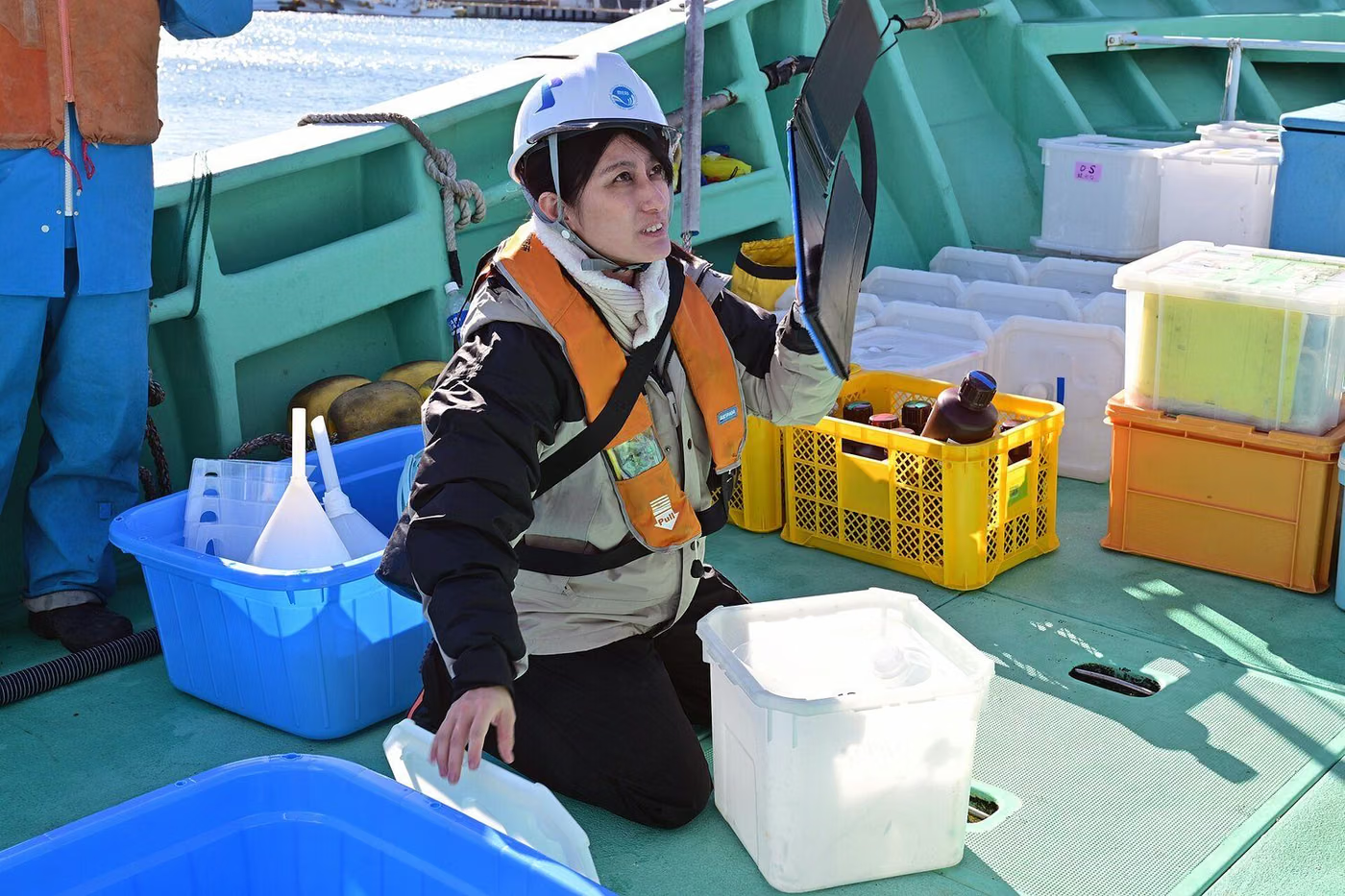
- Sampling is the largest component of total uncertainty in environmental analysis. The specimen container, preservation (acidification, cooling, storage in the dark), fill method and time to reach the laboratory are all defined in the standard; if any one is not met, the result loses its validity. Sampling must be carried out by authorised personnel per a written plan.
- The specimen must be submitted acidified with sulphuric acid and cooled
- High chloride content must be reported
- The specimen must be well homogenised; suspended solids contribute to COD
Duration of COD
Reflux takes the duration defined in the standard; measurement and calculation are short. The result is usually obtained the same day or the next.
COD Procedure
- 1The specimen is homogenised and diluted if required.
- 2Specimen, dichromate solution and catalyst are added to the tube.
- 3A masking reagent is added for high-chloride specimens.
- 4It is refluxed in the thermoreactor for the duration defined in the standard.
- 5It is cooled and spectrophotometric or titrimetric measurement is performed.
- 6COD is calculated in mg O2/L.
COD Acceptance Criteria
The acceptance criterion is the COD limit value defined in discharge legislation per the facility's sector, or the value stated in the discharge permit. 91/271/EEC also requires a minimum treatment efficiency for urban wastewater treatment plants.
Evaluation of Results
COD covers all oxidisable matter, biodegradable and non-biodegradable; it is therefore always higher than BOD. The COD/BOD ratio shows wastewater's suitability for biological treatment: as the ratio grows, biological treatment becomes harder. If chloride interference is not masked, the result comes out markedly above the true value.
COD Report
- Specimen identification, sampling point and date
- Standard and method applied
- Dilution factor and chloride masking information
- COD result (mg O2/L) and measurement uncertainty
- Limit value compared against
Accreditation
EUROLAB holds internationally recognised accreditation obtained from accreditation bodies party to the IAF and ILAC multilateral recognition arrangements, under ISO/IEC 17025 for laboratory testing, ISO/IEC 17020 for inspection and surveillance, and ISO/IEC 17021-1 and ISO/IEC 17065 for system and product certification. This chain ensures the reports and certificates issued are accepted worldwide.
Whether this test can be offered within accredited scope depends on your product and the standard applied; since accreditation is method-based, the scope is confirmed in writing at the quotation stage.
Scope and authorisationsRelated Regulations
- 91/271/EEC Urban Waste Water Treatment Directive
- 2000/60/EC Water Framework Directive
- (EU) 2010/75 Industrial Emissions Directive
Environmental Analysis — What Does This Testing Field Cover?
The section below describes the field that the COD test belongs to; the conditions and acceptance criteria of this particular test are given in the sections above. The scope specific to your product is confirmed in writing at the quotation stage.
Environmental analysis determines the presence and concentration of pollutants in water, soil, waste, air and flue gas samples. The output of this family is usually part of a permit, a declaration or an inspection file; the result has direct legal consequences.
In this family SAMPLING is half the result, and this is the feature that most sets the field apart. A sample taken at the wrong time, in the wrong container, under the wrong preservation or from the wrong point gives an invalid result no matter how well it is analysed in the laboratory. In waste water a grab sample and a composite sample give different information; in soil, surface and depth produce different results. Sampling therefore has its own standards and its own accreditation scope.
On the water side, physico-chemical parameters (pH, conductivity, turbidity, COD, BOD, suspended solids), ions, heavy metals, organic pollutants and microbiological parameters are measured. Drinking water and waste water carry different parameter sets and different limits; the same laboratory method leads to a different decision under the two regimes.
In soil and waste, heavy metals, hydrocarbons, PAH and PCB compounds and LEACHING BEHAVIOUR are determined. The leaching test carries a logic peculiar to this field: it is not the total amount of a pollutant in soil but the fraction that can pass into water that determines the environmental risk. Waste classification and the disposal decision rest largely on this test.
On the emissions side, dust, sulphur dioxide, nitrogen oxides, carbon monoxide, oxygen, moisture and total organic carbon are monitored in flue gas. Measurement is made on site under operating conditions and must represent the plant's actual operating regime; a measurement taken at low load does not show the emissions at full capacity.
Continuous measurement systems are a separate body of work. In large plants emissions are monitored continuously and the accuracy of these systems is verified periodically by comparison with independent measurements; the quality assurance framework governs this.
Noise and vibration measurements complete the environmental impact side of the field: environmental noise mapping, workplace noise exposure and vibration exposure measurements produce evidence for both environmental and occupational health legislation.
Method groups in this field
Sampling
Separate sampling standards for water, waste water, soil, waste, flue gas and ambient air; grab, composite and continuous sampling techniques.
Water physico-chemical
pH, conductivity, turbidity, colour, suspended solids, COD, BOD, TOC, alkalinity, nitrogen and phosphorus species.
Elemental analysis
Determination of heavy metals and trace elements in water, soil and waste by ICP-OES and ICP-MS.
Organic pollutants
Volatile organic compounds, PAH, PCB and organochlorine pesticides by GC-MS; hydrocarbon oil index.
Flue gas
Measurement of dust, SO2, NOx, CO, O2, moisture and total gaseous organic carbon; quality assurance of automated measuring systems.
Leaching and waste characterisation
Leaching tests and waste classification parameters; the basis for the disposal decision.
Commonly confused in this field
- An analytical result cannot be used on its own without the sampling record; the time, point, conditions and chain of custody are part of the report.
- Total content and leachable amount give different information; in waste classification, leaching behaviour is what counts.
- Emission measurement must be made under representative operating conditions of the plant; a result taken at partial load is misleading.
- Drinking water and waste water limits are defined in different legislation; the same parameter carries a different threshold under the two regimes.
- A sample from a single point does not represent the whole area; assessment of a contaminated site requires a grid-based sampling plan.
Which decisions these results support
- Compliance with environmental permits and discharge limits
- Quality assurance of continuous emission measurement systems
- Contaminated site assessment and the remediation decision
- Waste classification and selection of the disposal method
- Workplace exposure measurements and occupational health obligations
Related Tests
Frequently Asked Questions About COD
Our COD result came out higher than expected — why?
The most common reasons are high chloride interference and suspended solids in the specimen. If chloride is not masked, it consumes dichromate and raises the result. The specimen's homogeneity also directly affects the result.
Should we monitor COD or TOC?
Legislation mostly defines the limit via COD. TOC is preferred for process monitoring since it is faster and more repeatable. If a facility-specific COD-TOC relationship is established, TOC can be used for daily monitoring.