
What Is Glass?
Building glass tests are carried out with different sets of standards depending on the glass type. Breakage behavior and fragment count in tempered glass (EN 12150), impact behavior and durability in laminated glass (EN 14449), and gas leakage, moisture penetration and long-term durability in insulating glass (EN 1279) are evaluated. Safety glasses are also classified as impact and breakage resistance.
Purpose of Glass
The aim is to show that the glass behaves safely when broken and provides the heat, sound and mechanical performance envisaged on the facade.
Which Products Is Glass Applied To?
- Tempered safety glass
- Laminated glass
- Insulation (double glazing) units
- Coated low emissivity glasses
- Facade and roof glasses
In Which Sectors Is Glass Used?
Standards Related to Glass
- TS EN 12150-1/-2 (thermal tempered safety glass)
- TS EN 14449 (laminated glass and laminated safety glass — conformity assessment)
- TS EN 1279-1…-6 (insulating glass units)
- TS EN 12600 (pendulum impact test and classification)
- TS EN 356 (resistance to forced entry)
- TS EN 410 / EN 673 (light-solar properties and heat permeability)
Glass Conditions
- fracture pattern
- Count the number of pieces in a defined area of tempered glass
- pendulum blow
- Fall heights and classification defined in EN 12600
- insulating glass
- Accelerated aging cycles for moisture penetration and gas leakage
- Numune boyutu
- Dimensions defined in the standard according to the experiment
Equipment for Glass
- Pendulum impact experiment setup
- Aging and conditioning cabins
- Gas concentration measuring system
- Moisture penetration measuring device
- Spectrophotometer (optical properties)
- Fracture pattern evaluation frameworks
Sample Requirements for Glass
- Size and number of samples defined in the standard
- Glass type, thickness and coating information, if any, should be reported.
- Interstitial gas and edge system must be specified in insulating glass
- Samples must be representative of production conditions
Duration of Glass
Tempered glass fracture pattern and pendulum impact experiments take a short time. Insulating glass durability tests take weeks because they involve accelerated aging cycles.
Glass Procedure
- 1The glass type and the standard to be applied are determined.
- 2Size, thickness and appearance are checked.
- 3In tempered glass, the sample is broken and counted as pieces in a defined area.
- 4Pendulum impact test is applied and classification is made.
- 5Aging cycles are applied to insulating glass.
- 6Moisture penetration and gas leakage are measured.
Glass Acceptance Criteria
EN 12150-1 defines the minimum number of fragments and fracture behavior conditions for tempered glass, EN 12600 defines the impact classification, and EN 1279-2/-3 defines the maximum moisture penetration index and gas leakage rate in insulating glass. Within the scope of (EU) 305/2011, the test result is not a pass/fail decision, but the performance value to be announced in the Declaration of Performance (DoP). The national regulations and project specifications of the country where the structure where the product will be used determine which performance level is sufficient.
Evaluation of Results
The number of pieces in tempered glass is a direct indicator of safety: insufficiently tempered glass breaks into large and sharp pieces. In insulating glass, the edge sealing system determines the performance; Gas loss reduces the thermal insulation value over time and this is not visible in the first measurement.
Glass Report
- Glass type, thickness and structure information
- Applied standards
- Fracture pattern and number of pieces
- Pendulum impact class
- Moisture penetration index and gas leakage in insulating glass
- Optical and thermal performance values
Accreditation
EUROLAB holds internationally recognised accreditation obtained from accreditation bodies party to the IAF and ILAC multilateral recognition arrangements, under ISO/IEC 17025 for laboratory testing, ISO/IEC 17020 for inspection and surveillance, and ISO/IEC 17021-1 and ISO/IEC 17065 for system and product certification. This chain ensures the reports and certificates issued are accepted worldwide.
Whether this test can be offered within accredited scope depends on your product and the standard applied; since accreditation is method-based, the scope is confirmed in writing at the quotation stage.
Scope and authorisationsRelated Regulations
- Construction Products Regulation (EU) 305/2011
Construction Materials Testing — What Does This Testing Field Cover?
The section below describes the field that the Glass test belongs to; the conditions and acceptance criteria of this particular test are given in the sections above. The scope specific to your product is confirmed in writing at the quotation stage.
Construction materials testing shows whether a product performs the function it takes on within the structure. A wide field is gathered in this family, from the compressive strength of concrete to the thermal transmittance of glass, from sieve analysis of aggregate to the watertightness of windows.
What sets this family apart from the others is that the result turns directly into a REGULATORY DECLARATION. For products covered by construction products legislation a declaration of performance (DoP) is mandatory, and every essential characteristic in the declaration rests on a test result. Reaction-to-fire class, thermal conductivity, compressive strength, water permeability and release of dangerous substances are declared in this way. The declaration is a legal text carrying the manufacturer's signature; the test record behind it is the first document requested in an inspection.
The second distinguishing feature is that the product is assessed over its SERVICE LIFE. An electronic device runs for five years; a building component stays in place for fifty and is exposed throughout that time to freeze-thaw cycles, UV, moisture, chemical attack and load. Durability tests (freeze-thaw, carbonation, alkali-silica reaction, ageing) therefore carry as much weight in this field as classical strength tests.
Tests are separated by material type and each group has its own set of standards: cement and concrete, aggregate, masonry units, wood-based panels, thermal insulation, glass and glazing units, ceramic tiles, floor coverings, screeds, joint fillers and coating systems. Where the product will be installed determines which set applies — the same panel is assessed against different standards on a wall and on a floor.
Factory production control (FPC) is a continuous component of the field. CE marking on a construction product is not obtained with a single test and then left; the manufacturer must set up a system showing that it monitors production consistency, takes samples regularly and intervenes when there is a deviation. Depending on the product group, this system may have to be audited by a notified body.
Site testing is a separate body of work. In the laboratory the product is approved; on site it is checked that the product really is of the declared class and that it has been applied correctly. Fresh concrete slump, cylinder sampling, aggregate sieve analysis and in-situ watertightness tests fall within this scope.
Method groups in this field
Concrete and cement
Slump, air content and unit weight in fresh concrete; compressive and flexural strength, water permeability and freeze-thaw resistance in hardened concrete. For cement, compressive strength, setting time and composition analysis.
Aggregate
Sieve analysis, particle shape, Los Angeles abrasion resistance, freeze-thaw, alkali reactivity and density/water absorption.
Thermal and energy performance
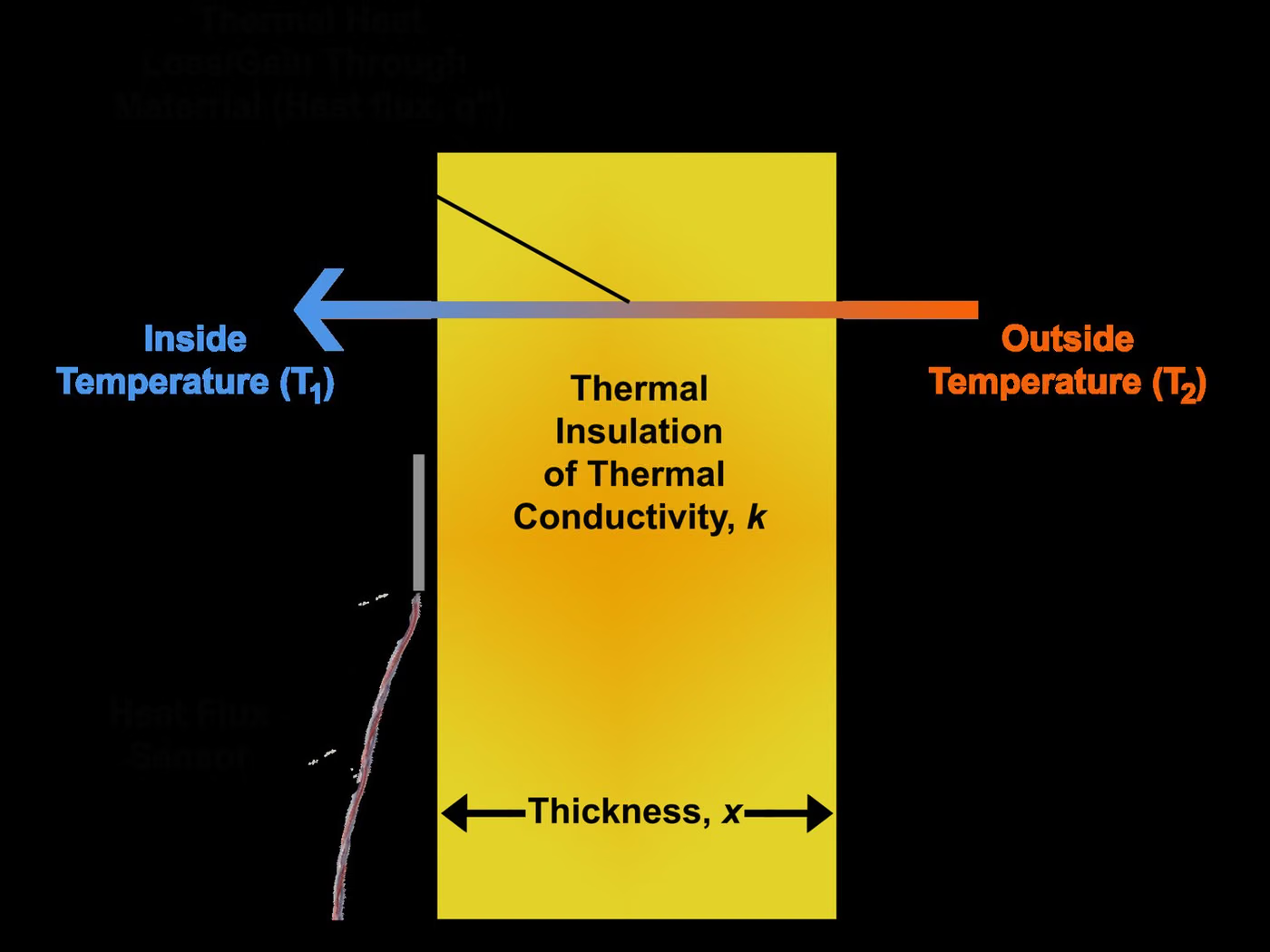
Thermal conductivity and thermal resistance, calculation of thermal transmittance (U value) in glazing units, solar energy transmittance.
Facade and joinery
Air permeability, watertightness and wind load resistance in windows and doors; fire performance in facade systems.
Fire performance
Reaction-to-fire classification and fire resistance tests; these are two separate concepts and are addressed by separate standards.
Masonry, tile and flooring
Compressive strength, water absorption, abrasion resistance, slip resistance, stain and chemical resistance.
Emissions and dangerous substances
Formaldehyde release from wood-based panels, VOC emissions from construction products, leaching behaviour of aggregates and waste.
Commonly confused in this field
- REACTION to fire and RESISTANCE to fire are different concepts: one describes the material's contribution to a fire, the other how long a component holds the fire back.
- A declaration of performance is not a certificate; it is the manufacturer's declaration. Notified body involvement varies with the product group and the assessment system.
- A test result is valid for the mounting arrangement in which the product was tested. A different substrate, a different thickness or a different joint detail may require reassessment.
- A site sample and a laboratory sample are not the same thing. A concrete cylinder taken on site also reflects application and curing conditions; it does not replace product approval.
- ASTM and EN construction standards measure similar quantities with different specimens and scales; the results cannot be converted one-to-one.
Which decisions these results support
- Declaration of performance (DoP) and CE marking
- Establishing and maintaining the factory production control system
- On-site conformity control of concrete, aggregate and workmanship
- Meeting fire and energy performance requirements
- Verifying the technical items in the project and tender specification
Related Tests



Frequently Asked Questions About Glass
What is the difference between tempered glass and laminated glass?
When tempered glass breaks, it breaks into small and blunt pieces, but the gap is opened. When laminated glass breaks, the pieces remain stuck to the intermediate layer and continue to function as a barrier. Laminated is preferred in places where there is a risk of falling.
Will the gas from my double glazing escape over time?
Some leakage is inevitable; EN 1279-3 limits the maximum annual leakage rate. Edge sealing system quality determines this ratio and is the key to long-term thermal performance.