
What Is Pack Tests?
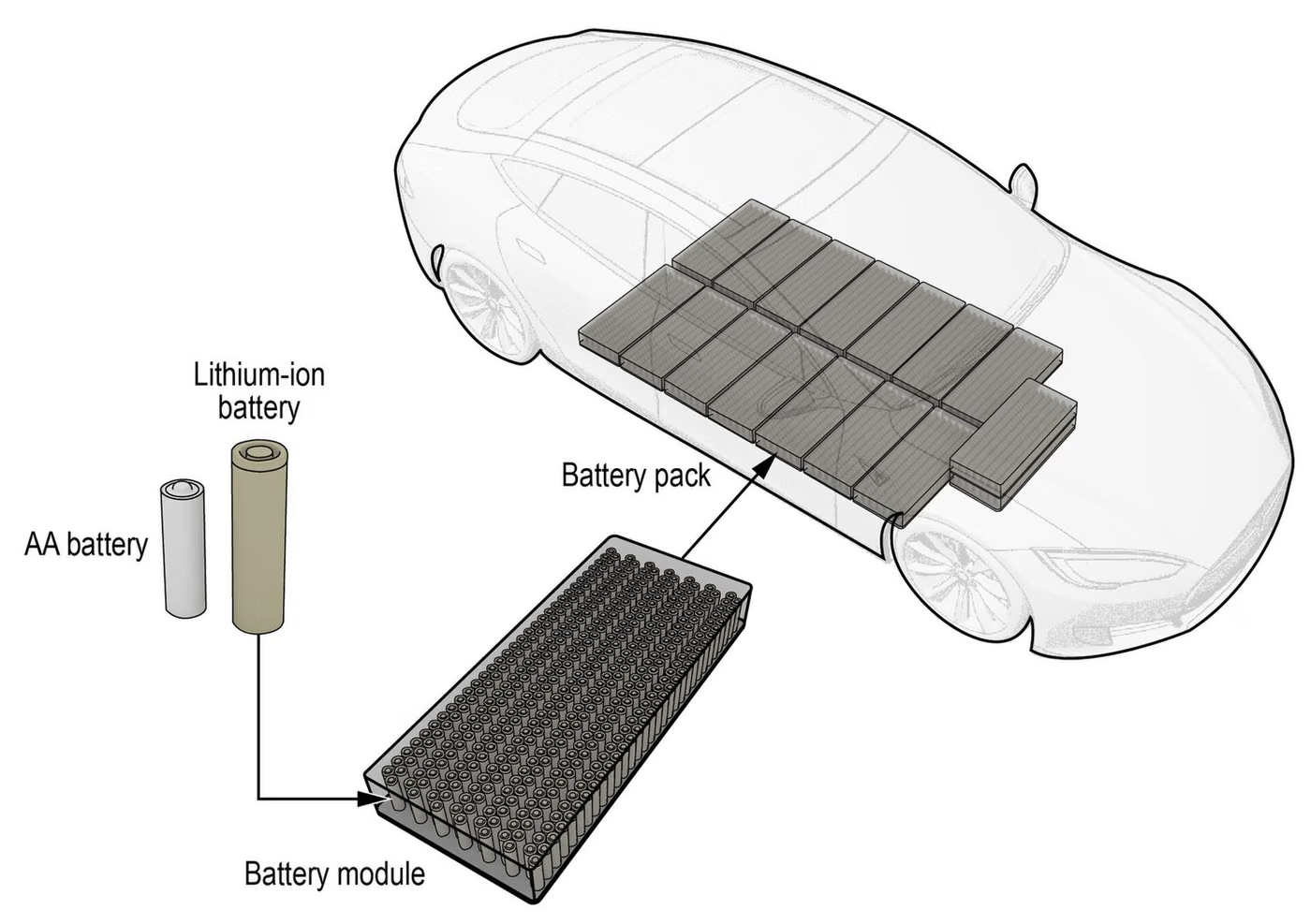
Pack tests are the group of tests that evaluate the complete battery pack, in which cells and modules are combined with the BMS, cooling, contactors and mechanical enclosure. Vehicle- and system-level requirements are verified at this level.
Purpose of Pack Tests
The purpose is to verify that the battery pack remains safe under real use and crash conditions on the vehicle or system, and that the BMS performs its protective functions.
Which Products Is Pack Tests Applied To?
- Electric vehicle battery packs
- Hybrid vehicle batteries
- Energy storage systems
- Industrial vehicle traction batteries
In Which Sectors Is Pack Tests Used?
Standards Related to Pack Tests
- UNECE R100electric vehicle and battery safety test
- ISO 6469-1
- UL 2580Safety in electric vehicle batteries test
- IEC 62619lithium battery safety in industrial applications test
- ISO 12405Test conditions for electric vehicle lithium battery packs test
- UN 38.3Transport safety tests on lithium batteries test
- IEC 62133Safety in portable cells and batteries test
- IEC 62620industrial lithium cells and batteries test
- UL 1642safety in lithium cells test
- UL 2054Safety in home and commercial use batteries test
Pack Tests Conditions
- BMS communication
- Data access is required via CAN or an equivalent interface
- Electrical safety
- Insulation resistance and touch protection are measured
- Mechanical tests
- Vibration, shock, crush and, if required, fire resistance
- Environment
- Temperature range defined in the specification
Equipment for Pack Tests
- High-voltage and high-current test infrastructure
- Insulation resistance measurement system
- Shaker and shock test rig (sized for the pack)
- Explosion-protected test room and gas analysis
- CAN data logging system
Sample Requirements for Pack Tests
- The pack must represent the series-production configuration
- The BMS software version must be recorded
- Connection interfaces and the cooling circuit must be ready
- High-voltage safety procedure must be applied
Duration of Pack Tests
A comprehensive pack programme, including preparation, mechanical tests and electrical verification, can take several weeks.
Pack Tests Procedure
- 1The pack is identified, and BMS data and the initial condition are recorded.
- 2Electrical safety measurements (insulation, touch protection) are performed.
- 3Performance and thermal tests are carried out.
- 4Mechanical tests (vibration, shock, crush) are applied.
- 5Insulation and function are checked after each stage.
- 6Fire-resistance and propagation tests are performed if required.
Pack Tests Acceptance Criteria
Acceptance criteria are defined in UNECE R100 and related standards: no electrolyte leakage, insulation resistance not falling below the limit value, no fire or explosion, and preservation of enclosure integrity.
Evaluation of Results
Electrical safety is re-measured after each mechanical test. The BMS's protective responses are verified from the records.
Pack Tests Report
- Applied standard and regulation
- Pack configuration and BMS version
- Sequence of applied tests and parameters
- Insulation resistance and electrical safety results
- Mechanical test observations and photographs
Accreditation
EUROLAB holds internationally recognised accreditation obtained from accreditation bodies party to the IAF and ILAC multilateral recognition arrangements, under ISO/IEC 17025 for laboratory testing, ISO/IEC 17020 for inspection and surveillance, and ISO/IEC 17021-1 and ISO/IEC 17065 for system and product certification. This chain ensures the reports and certificates issued are accepted worldwide.
Whether this test can be offered within accredited scope depends on your product and the standard applied; since accreditation is method-based, the scope is confirmed in writing at the quotation stage.
Scope and authorisationsRelated Regulations
- UNECE R100 Part II (REESS)
- ISO 6469 (electric vehicle safety)
- EU Battery Regulation
Batarya Testleri — What Does This Testing Field Cover?
The section below describes the field that the Pack Tests test belongs to; the conditions and acceptance criteria of this particular test are given in the sections above. The scope specific to your product is confirmed in writing at the quotation stage.
Battery testing answers three separate questions, each with its own body of standards: can the battery be transported, is it safe in use, does it deliver the declared performance? These three questions are often confused with one another, and the confusion has commercial consequences — a market cannot be entered with a transport report, and a shipment cannot be made with a product safety report.
On the transport side, UN 38.3 is a mandatory gate; a battery without that evidence cannot be shipped. On the safety side the application determines what applies: IEC 62133-2 for portable products, IEC 62619 and IEC 63056 for industrial and energy storage applications, UNECE R100, UL 2580 and ISO 6469 for electric vehicles. On the performance side, capacity, internal resistance, cycle life, self-discharge, charge acceptance and temperature-dependent behaviour are measured.
The distinction of LEVEL is essential in this family and is the subject that causes the most argument in the supply chain. Cell, module and pack are assessed separately; a certificate obtained for a cell does not demonstrate the conformity of the pack. Alongside the cells, the behaviour of the pack is determined by the battery management system, the cooling design, the mechanical structure, the interconnection arrangement and insulation coordination. Putting the cell supplier's report into the pack file is a common but inadequate approach.
Thermal runaway and its propagation are the most critical subject in the field. A lithium cell may enter a self-sustaining chemical reaction when damaged or overheated; at that point removing the heat from outside is usually not possible. Modern standards therefore treat thermal runaway of a single cell as an UNAVOIDABLE fault scenario and change the question: does the event propagate to neighbouring cells, what does it release outside the pack, and how much time is left for the user to escape?
In this field the battery management system is assessed not as an electronic board but as a SAFETY FUNCTION. It is shown that overcharge, overdischarge, overcurrent and overtemperature protections actually operate, that the system falls to the safe side in a fault, and that its software has been verified. In industrial and vehicle applications this assessment is tied to functional safety frameworks.
The regulatory side is becoming rapidly more demanding. Battery Regulation (EU) 2023/1542 goes beyond safety and introduces obligations for carbon footprint declaration, recovered content ratio, durability and capacity declaration, the battery passport, and removability for portable batteries. This takes the scope of testing beyond classical safety tests.
Method groups in this field
Electrical abuse
Overcharge, overdischarge, external short circuit, forced discharge and unbalanced charging. This is where it is seen whether the protection circuits actually work.
Mechanical abuse
Vibration, shock, crush, penetration, free fall and tipping. It is monitored whether internal short circuit conditions arise.
Thermal tests
Temperature cycling, thermal shock, high temperature storage, fire exposure and thermal runaway propagation.
Environmental tests
Humidity, low pressure, salt spray and, where required, immersion; these come to the fore in vehicle and outdoor applications.
Performance measurements
Capacity, energy and power, internal resistance, efficiency, cycle life, calendar life and temperature-dependent behaviour.
BMS verification
Verification of protection thresholds, the cell balancing function, communications and fault response.
Commonly confused in this field
- UN 38.3 is not a product safety certificate; it only demonstrates transport conformity.
- A cell certificate does not demonstrate pack conformity. The pack is assessed separately with its own architecture.
- Two packs built from the same cell give different results; cooling, interconnection and mechanical structure are decisive.
- A performance test is not a safety test. A cycle life report does not satisfy safety requirements.
- For an electric vehicle battery, a UL 2580 report and UNECE R100 approval are not the same thing; one is a standards assessment, the other a type approval regime.
- A vehicle battery moved into a second-life application enters a new usage profile; the earlier assessment does not carry over directly.
Which decisions these results support
- Transport conformity and the test summary for shipment
- Product safety declaration and market access
- Performance, durability and carbon footprint declarations under the Battery Regulation
- Assessing the impact of a cell supplier or BMS change
- Site acceptance processes for an energy storage system
Related Tests
Frequently Asked Questions About Pack Tests
Why is the BMS so important in pack testing?
The BMS carries out the protective functions at pack level: it manages the overcharge, overdischarge, overcurrent and temperature limits. BMS data must therefore be recorded and its responses verified during testing.