
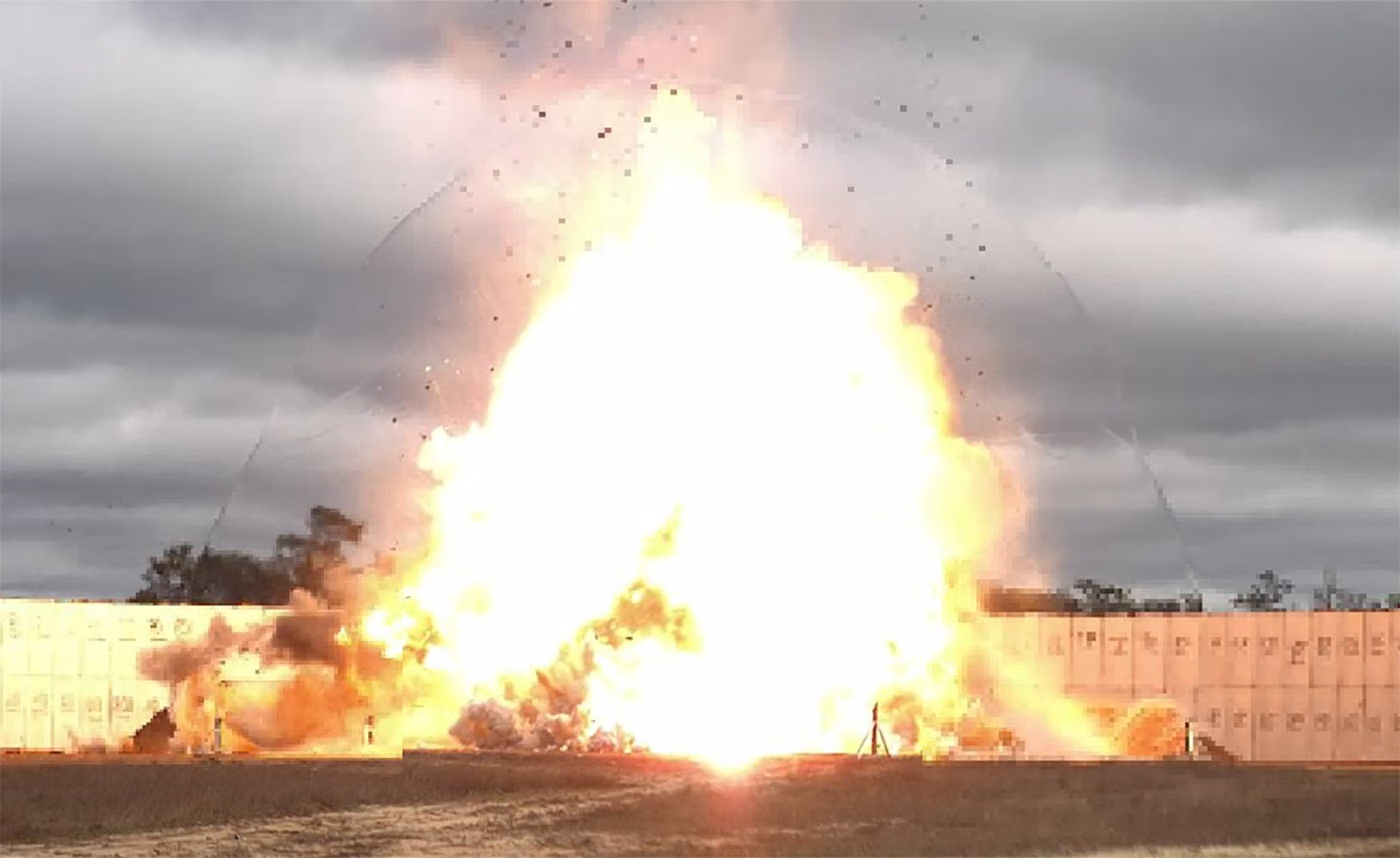
What Is Blast?
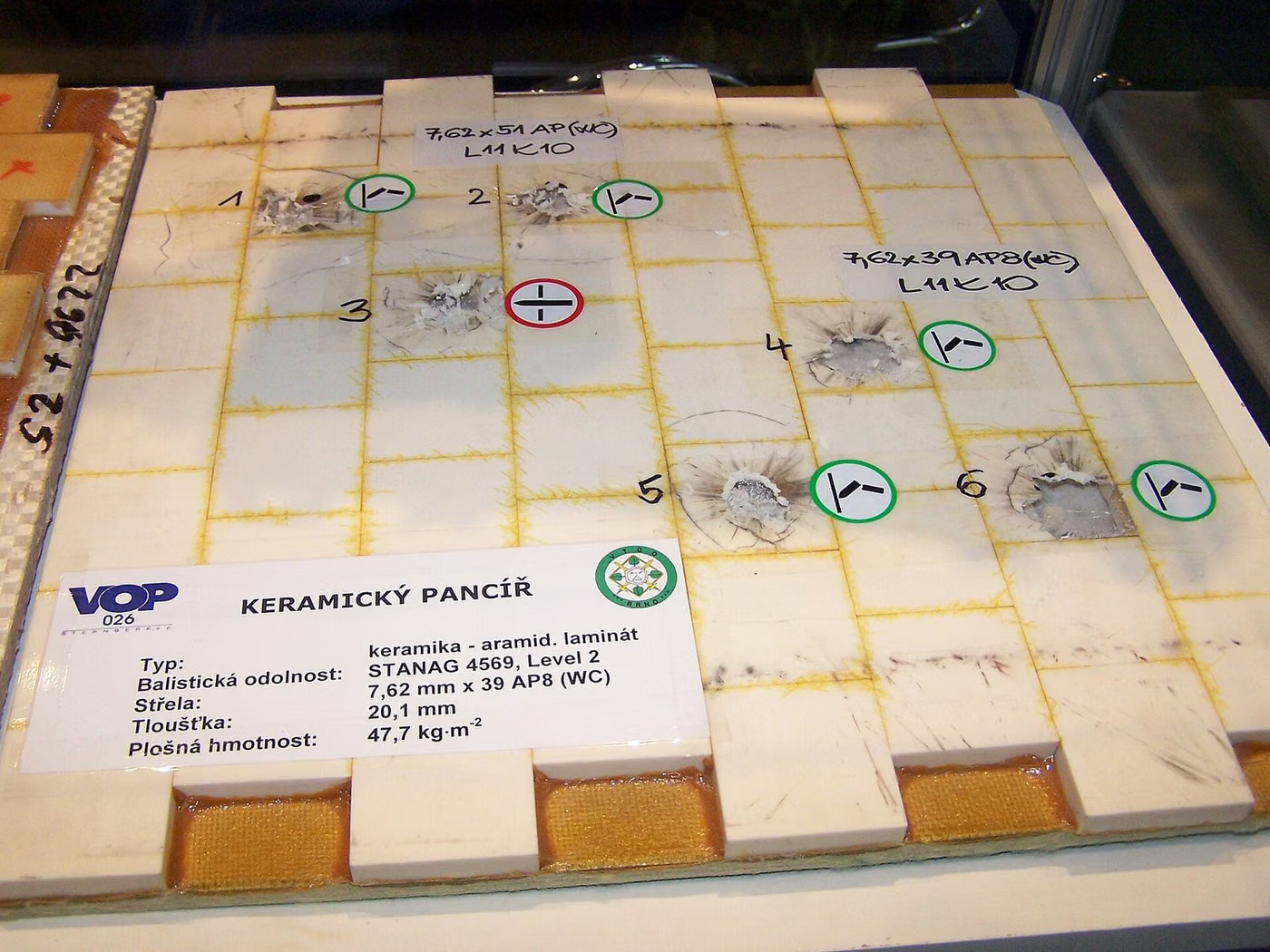
The blast test is a test in which elements such as glass, facades, doors or panels are classified by exposing them to defined peak-pressure and impulse values, either in an arena trial with a real explosive (ISO 16933) or in a shock tube (ISO 16934).
Purpose of Blast
The purpose is to verify that the structural element retains its integrity against the defined blast load and does not create a hazard in the region behind it.
Which Products Is Blast Applied To?
- Blast-resistant glass and facades
- Security doors
- Protective walls and panels
- Critical-infrastructure structural elements
In Which Sectors Is Blast Used?
Standards Related to Blast
- ISO 16933 (arena trial)
- ISO 16934 (shock tube)
- EN 13123 / EN 13124
- GSA/ISC blast test protocols
- MIL-STD-810environmental engineering assessments and laboratory tests test
- MIL-STD-461electromagnetic interference in military systems test
- MIL-STD-202Testing methods in electronic parts test
- MIL-STD-883Test methods in microelectronic devices test
- MIL-STD-167mechanical vibration in ship equipment test
- MIL-S-901high intensity shock testing on ship equipment test
- MIL-STD-704aircraft electrical power characteristics test
- MIL-STD-127528 V electrical system in military vehicles test
- NATO STANAG TestsTests within the scope of NATO standardization agreements test
Blast Conditions
- Loading
- Defined as a pair of peak reflected pressure and impulse
- Method
- Arena trial (real explosive) or shock tube
- Specimen mounting
- Frame and connection representing the real application
- Assessment
- Hazard rating: debris-throw distance and integrity
Equipment for Blast
- Blast arena or shock tube
- Pressure transducers and high-speed data logging
- High-speed camera
- Specimen mounting frame
Sample Requirements for Blast
- The specimen and frame must represent the real installation
- Glass interlayer and film application must be final
- Pressure measurement points must be as defined in the standard
- The number of specimens is defined in the standard
Duration of Blast
Typically 3–8 weeks, depending on arena-trial scheduling.
Blast Procedure
- 1Target pressure and impulse values are determined.
- 2The specimen is set up in a frame representing its real installation.
- 3Pressure measurement and high-speed recording are prepared.
- 4Blast or shock-tube loading is applied.
- 5Measured pressure and impulse are verified.
- 6Damage and debris distribution are classified.
Blast Acceptance Criteria
The acceptance criterion is the hazard class defined in the applied standard; debris throw and loss of integrity are evaluated against the classification tables.
Evaluation of Results
The shock tube and the arena trial do not give the same classification; the standards define them as separate methods. The frame and connection detail are influential enough to determine the result; if the laboratory frame does not represent the real installation, the result cannot be transferred to the field.
Blast Report
- Standard and method applied
- Specimen and frame description
- Measured peak pressure and impulse
- High-speed image recordings
- Damage and hazard classification
Accreditation
EUROLAB holds internationally recognised accreditation obtained from accreditation bodies party to the IAF and ILAC multilateral recognition arrangements, under ISO/IEC 17025 for laboratory testing, ISO/IEC 17020 for inspection and surveillance, and ISO/IEC 17021-1 and ISO/IEC 17065 for system and product certification. This chain ensures the reports and certificates issued are accepted worldwide.
Whether this test can be offered within accredited scope depends on your product and the standard applied; since accreditation is method-based, the scope is confirmed in writing at the quotation stage.
Scope and authorisationsRelated Regulations
- Building-security specifications
- Critical-infrastructure protection requirements
Savunma Testleri — What Does This Testing Field Cover?
The section below describes the field that the Blast test belongs to; the conditions and acceptance criteria of this particular test are given in the sections above. The scope specific to your product is confirmed in writing at the quotation stage.
Defence testing shows that equipment keeps working in a military mission environment. What distinguishes it from civil testing is not only the severity of the levels; the ASSUMPTION ITSELF is different. The equipment must work on the first attempt, after months of storage, in an environment where maintenance is not available, inside a platform crowded with its own transmitters and receivers.
This assumption shapes the test plan. For a civil product "normal use" can be defined; for military equipment what is defined is the LIFE CYCLE ENVIRONMENTAL PROFILE: the exposure of every stage is listed — from manufacture to storage, from storage to shipment, to transport on a vehicle, to use in the field and to maintenance — and the testing is derived from that list.
On the environmental side, MIL-STD-810 methods are applied: temperature, humidity, altitude, rain, sand and dust, salt fog, fungus, shock, vibration, explosive atmosphere and gunfire vibration. The standard itself sets no acceptance criterion; which method is applied at which level, and what is acceptable, come from the programme specification.
On the electromagnetic side, MIL-STD-461 requirements come into play and interference within the platform is controlled. It measures the same physics as civil EMC but with a different assumption: the equipment will operate on a platform crowded with its own radars and radios, and interference inside the platform puts the mission directly at risk. The limits are therefore far stricter.
Power quality is a separate body of work. MIL-STD-1275 for military vehicles and MIL-STD-704 for aircraft define the supply characteristics: voltage ranges, transients, ripple and interruption behaviour. This is where commercially derived equipment most often gets stuck when integrated into a military platform.
On the shock side, naval vessels carry their own regime: the MIL-S-901 high-impact shock test simulates the effect of an underwater explosion and tests the equipment on a real impact machine. This is an entirely different scale from classical laboratory shock testing.
The suitability of commercial off-the-shelf (COTS) equipment for military use is a growing subject in the field. Cost and lead time pressures encourage the use of commercial products; but a commercial product is not considered suitable unless it has been through the military profile, and a gap analysis plus additional qualification is required.
In this family the test plan comes from the PROGRAMME SPECIFICATION. The phrase "complies with MIL-STD-810" is therefore not a verifiable claim on its own; which method, which procedure, which level and which revision must all be answered.
Method groups in this field
Environmental
MIL-STD-810 methods: temperature, humidity, altitude, solar radiation, rain, sand and dust, fungus, salt fog, immersion, explosive atmosphere.
Mechanical
Vibration (random, sine, gunfire), shock, acceleration, free fall and transport simulation.
Electromagnetic
MIL-STD-461 CE/CS/RE/RS requirements; MIL-STD-464 at platform level.
Power quality
Conformity to the MIL-STD-1275 vehicle and MIL-STD-704 aircraft supply characteristics.
High-impact shock
The MIL-S-901 naval shock test; simulation of the effect of an underwater explosion.
Component qualification
MIL-STD-883 microelectronics and MIL-STD-202 electronic parts test methods.
Commonly confused in this field
- The phrase "MIL-STD-810 certified" is incorrect; the standard produces no certificate, the output is a qualification report.
- A conformity claim that does not state the method, procedure and level cannot be verified.
- The revision letter (F, G, H) changes the content of methods and the procedure numbers; the specification must state the revision.
- A civil EMC report does not replace MIL-STD-461; the limits, distances and set-ups are different.
- Power quality is the requirement most often skipped when integrating a commercial product into a military platform.
- Applying a method does not show that the equipment maintains its function in that environment; the functional acceptance criterion is defined separately.
Which decisions these results support
- Qualification under a supply contract
- Component verification before platform integration
- Suitability of commercially derived equipment for military use and gap analysis
- Specification compliance in NATO and export programmes
- Establishing the life cycle environmental profile
Related Tests



Frequently Asked Questions About Blast
According to which standard is Blast made?
Blast is executed in scope ISO 16933 (arena trial), ISO 16934 (shock tube), EN 13123 / EN 13124 and GSA/ISC blast test protocols. The limit values and acceptance criteria to be applied are defined in the product standard; The version valid for your product is confirmed in writing at the offer stage.
Which products does Blast apply to?
Mainly applied to Blast-resistant glass and facades, Security doors, Protective walls and panels and Critical-infrastructure structural elements. Whether your product is included in the scope is determined by examining its technical specifications and intended use.
Under what conditions is Blast done?
The determining parameters are: Loading — Defined as a pair of peak reflected pressure and impulse, Method — Arena trial (real explosive) or shock tube and Specimen mounting — Frame and connection representing the real application. The full terms are in the "Test Conditions" section on the page and vary depending on the product standard.
What kind of sample is needed for Blast?
The specimen and frame must represent the real installation, Glass interlayer and film application must be final and Pressure measurement points must be as defined in the standard. The number of samples is determined according to the product standard and the scope to be reported.
How long does Blast take?
Typically 3–8 weeks, depending on arena-trial scheduling. This duration belongs to the experiment itself; sample preparation, queuing and reporting are also evaluated. A realistic schedule for your product is given in the offer.
What is the Blast result called "appropriate"?
The acceptance criterion is the hazard class defined in the applied standard; debris throw and loss of integrity are evaluated against the classification tables.